
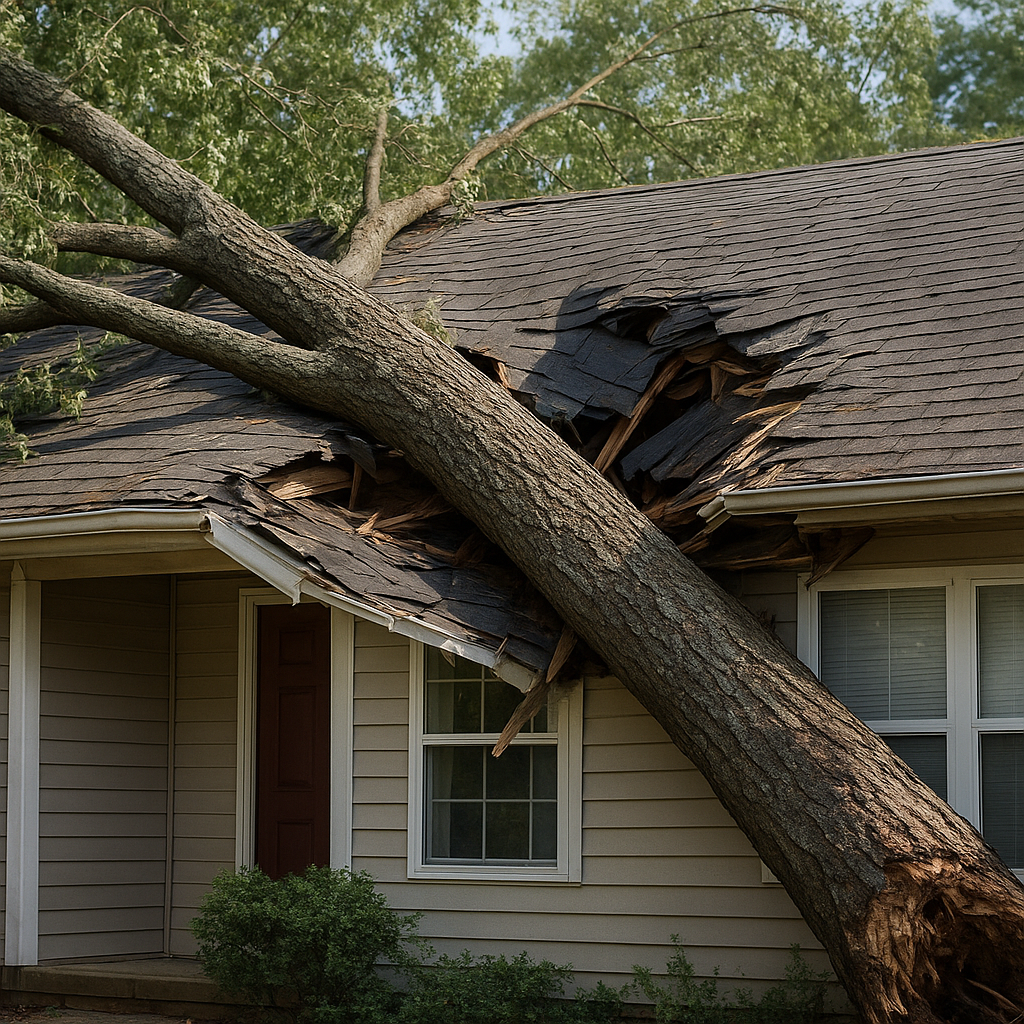
People come first. Move everyone away from the damaged area and leave by a safe route if possible. In the United States, call 911 for injuries, trapped occupants, suspected structural instability, or immediate electrical or gas hazards. If a safe exit is blocked, move as far from the impact area as possible and contact emergency services for instructions. Do not force a path through unstable debris.
Once everyone is out of immediate danger, here is what to do if a tree falls on your house:
- 1. Keep household members and pets away from the damage.
- 2. Contact emergency services, affected utilities, and your insurer as appropriate.
- 3. Document damage only from safe locations.
- 4. Confirm insurance procedures and possible coverage.
- 5. Arrange professional tree removal and temporary protection.
- 6. Have the house assessed before returning or starting permanent repairs.
- 7. Notify your insurer if the tree came from neighboring property.
1. Get Everyone Away From Immediate Danger
A fallen tree can cause damage beyond the spot where it landed. Roof framing may shift, wiring may be damaged inside walls, and ceilings or exterior structures may become unstable. Broken glass and hanging branches add hazards along an otherwise familiar exit route.
- Move household members and pets away from the impact area.
- Use a safe exit if one is available. Avoid routes beneath damaged ceilings or through debris.
- Do not enter damaged rooms to collect phones, documents, or other belongings.
- Outside, stay clear of hanging branches, leaning trees, damaged porches, and unstable walls.
- Do not re-enter until the appropriate emergency responders or qualified professionals say it is safe.
If the way out is blocked or unsafe, tell the emergency dispatcher where everyone is located and what prevents an exit. Follow their instructions rather than trying to climb over or cut through the tree.
If There Are Downed Wires or Signs of a Gas Leak
Treat fallen wires as live. Avoid the tree, nearby fences, pooled water, and other objects that could be in contact with a line. Follow the National Weather Service’s wind safety guidance and stay away from downed power lines. Report the hazard to emergency services and the electric utility from a safe location.
If a gas odor, hissing sound, or other sign suggests a gas leak, leave the affected area without operating switches, appliances, or ignition sources. Call emergency services and the gas utility once safely away. Do not try to disconnect utilities or move wires yourself.
Belongings, photos, and cleanup can wait. An unsafe exit, unstable roof, or utility hazard needs emergency help—not a closer look.
2. Call Emergency Services, Utilities, and Your Insurer
If a tree fell on your house, who to call depends on the danger—not just the size of the tree. In the United States, use 911 for immediate threats. Once those threats are addressed, move on to the insurance and recovery calls.
| Situation | Who to contact | Purpose |
|---|---|---|
| Injury, trapped occupants, collapse risk, or another immediate threat | 911 | Emergency assistance |
| Fallen wires or suspected utility damage | Emergency services and the relevant utility | Hazard assessment and utility isolation |
| Everyone is safe and immediate hazards are addressed | Homeowners insurer or claims line | Report damage and confirm claim procedures |
| Tree remains on the building | Qualified, insured tree-removal professional | Plan safe removal |
| Building stability is uncertain | Appropriate building professional or structural engineer | Assess damage and safe access |
Give callers your address, known injuries, the tree’s location, and any visible utility damage. Tell the insurer whether the home is accessible and whether emergency work is needed. Save the claim number and contact details.
A tree-removal contractor is not a substitute for emergency responders or utility crews. Removal must not start while unresolved electrical or other immediate hazards put workers or occupants at risk.
3. Document the Damage From a Safe Location
Photos and records can help explain the loss, but documentation must never delay evacuation or emergency assistance. Start outside the hazard area. Interior pictures can wait until safe access is established.
- Take wide-angle photographs showing the tree’s position and affected parts of the house.
- Capture closer views of roof damage, broken windows, and other damage only where safely accessible.
- Record the date, approximate time, and known circumstances. Separate observations from guesses.
- Photograph affected rooms, furniture, electronics, and other belongings after access is cleared.
- Keep receipts for emergency services, temporary lodging, and protective work.
- Save repair estimates, invoices, insurer correspondence, and notes from calls.
- Ask the insurer before disposing of damaged items, unless keeping them creates a hazard or conflicts with official instructions.
Use Ready.gov’s disaster recovery guidance when planning safe access, documenting losses, and beginning recovery. Keep copies of records somewhere accessible even if the house remains off-limits.
4. Contact Your Insurer and Understand What May Be Covered
Does homeowners insurance cover a tree falling on your house? It may, but U.S. homeowners insurance coverage depends on the policy, cause of the fall, property damaged, exclusions, deductible, and applicable limits. A deductible is the portion of a covered loss the policy leaves to the policyholder.
The Insurance Information Institute explains fallen-tree coverage in general terms. Your own policy determines the protection available for this incident. Report what happened accurately rather than assuming the cause or coverage.
Damage to the House and Belongings
Dwelling coverage generally concerns the insured house and its structure. Personal property coverage concerns belongings, such as furniture and clothing. These parts of a policy may have different limits or conditions.
A covered peril means a cause of loss included under the policy’s terms. Not every fallen-tree incident is automatically covered. Ask the insurer how the cause of the fall and any relevant exclusions affect structural damage and damaged belongings.
Tree Removal and Debris Removal
Removing a tree from a damaged structure is not necessarily treated the same as clearing branches and debris from the yard. Coverage, conditions, and limits can differ.
Ask how emergency tree removal, access equipment, hauling, and property cleanup will be handled. Request an itemized contractor estimate so the insurer can distinguish the work involved. Do not assume the full removal bill will be reimbursed.
Temporary Accommodation
Additional living expenses coverage may help with eligible extra costs if a covered loss makes the home uninhabitable. This can include qualifying temporary accommodation expenses, subject to policy terms.
Confirm eligibility, spending limits, any time limits, and documentation requirements before making longer-term arrangements when practical. Keep lodging and other relevant receipts; reimbursement is not automatic.
Questions to Ask the Insurer
- What should happen before removal or repairs begin?
- What deductible and coverage limits apply?
- What documentation is needed, and how should it be submitted?
- Are emergency protective measures covered?
- Could temporary accommodation qualify for reimbursement?
- Does an adjuster need to inspect before nonurgent work starts?
5. Arrange Safe Tree Removal and Temporary Protection
A tree resting on a building may be loading the roof unevenly or supporting damaged material. Cutting one section can shift another. Tree removal after house damage needs professional assessment and controlled work—not a quick chainsaw cleanup.
- Coordinate with the insurer when practical, without delaying emergency safety measures.
- Confirm that utility hazards have been addressed before removal begins.
- Choose qualified, insured professionals experienced in removing trees from structures. A qualified arborist can help assess tree-related hazards.
- Request proof of insurance and a written scope covering removal, equipment, debris handling, and exclusions.
- Retain estimates, invoices, and records of emergency work.
- Arrange temporary weatherproofing only after professionals determine the work area is safe.
Do not climb onto the roof, cut load-bearing branches, use a chainsaw on the lodged tree, or try to pull it off with a vehicle or rope. Even a small-looking branch may be under tension or holding weight.
Professional tarping or boarding may help limit further weather damage, but nobody should enter an unstable area to install it. Ask the insurer what protective work can proceed and how to document the condition before and afterward.
6. Have the House Assessed and Plan Repairs
Removing the tree does not establish that the building is safe. Hidden damage may remain, and parts of the structure may need stabilization before repairs or re-entry.
The right assessment depends on what was hit and what damage is suspected. A licensed contractor may assess repair needs, a structural engineer may evaluate stability concerns, and a qualified electrician may assess affected wiring. Not every incident requires the same inspections.
- Roof framing and roofing materials: Check for displaced supports, damaged decking, and openings.
- Walls and ceilings: Assess cracks, movement, sagging, and damaged connections.
- Electrical systems: Have suspected impact or water damage evaluated before affected systems are used.
- Water intrusion: Identify wet materials and the source of leaks.
- Other structural damage: Evaluate affected floors, supports, and attached structures where relevant.
Confirm local permit requirements with the appropriate building department. Coordinate permanent repairs with the insurer, keeping written estimates and records of any additional damage discovered during work. If the repair scope changes, ask how to submit the revised information.
Before moving back in, confirm that the professionals responsible for evaluating the damage have addressed safe access and occupancy—not just tree removal.
7. What If the Tree Came From a Neighbor’s Property?
The tree’s ownership alone does not determine who pays. Insurance coverage, evidence of negligence, and state law may affect responsibility. A neighbor is not automatically liable because the tree grew on their property.
Notify your own insurer, document the incident safely, and preserve any relevant existing photos or written communications about the tree’s condition. Let the insurer explain how the claim and any recovery from another party may be handled. For a disputed liability issue, seek state-specific legal guidance rather than relying on assumptions.
Frequently Asked Questions
Can You Stay in a House After a Tree Falls on It?
Visible damage alone is not a reliable safety assessment. Hidden structural or electrical damage may exist even when a room looks usable. Stay away from affected areas and follow the appropriate emergency responders’ or qualified professionals’ instructions about evacuation, access, and occupancy.
Should You Remove the Tree Before the Insurance Adjuster Arrives?
Urgent safety work may be necessary before an adjuster can attend. Contact the insurer when practical, preserve photos from safe locations, and keep itemized receipts. Nonurgent removal or repairs should be coordinated with the insurer, but immediate safety measures should not wait solely for an inspection.
Does Insurance Pay If a Tree Falls Without Damaging the House?
Debris-removal coverage may be limited or unavailable when no insured structure is damaged. Some policies have specific exceptions, such as certain blocked-access situations. Check the policy and ask the insurer whether the circumstances qualify before assuming cleanup costs are covered.